TL;DR:
- Effective visual presentations require strategy, simplicity, consistency, and reliable technology.
- Visuals serve as a silent yet powerful brand and engagement tool before speakers begin.
- Continuous planning, testing, and feedback improve audience connection and presentation impact.
Most corporate presentations are forgotten within hours of delivery. That's not because the content lacks value. It's because the visuals fail to do their job. Glossy slides and polished graphics can look impressive on screen, yet still leave attendees disengaged and struggling to recall key messages. True visual presentation success goes well beyond attractive design. It requires a deliberate strategy that blends clarity, technology, and audience understanding. This guide covers what visual presentation really means in a corporate event context, the principles that make it work, the technology behind it, and the practical steps you can take to lift engagement at your next conference.
Table of Contents
- Defining visual presentation in corporate events
- Key principles of impactful visual presentation
- The technology behind visual presentations
- Strategies to maximise audience engagement
- Measuring and improving your visual presentations
- Our perspective: Why visual presentation is your silent sales pitch
- Take your next event's visual presentation further
- Frequently asked questions
Key Takeaways
| Point | Details |
|---|---|
| Definition matters | Effective visual presentation is about clarity, strategy, and connecting with your audience, not just attractive slides. |
| Simplicity drives engagement | Limiting each slide or visual to one key idea keeps the message clear and memorable for attendees. |
| Technology is crucial | Reliable AV setup, tailored to your event size and goals, ensures your visuals work seamlessly when it counts. |
| Prep and feedback | Thorough rehearsals and post-event improvements are essential for constantly raising your presentation standard. |
Defining visual presentation in corporate events
Visual presentation in a corporate event setting is the deliberate use of visual elements to communicate ideas, reinforce messages, and guide an audience's attention throughout a session. It is not simply a slide deck. It is the entire visual environment your attendees experience, from the moment they walk into the room to the final panel discussion.
Think of it as a system with several interconnected parts:
- Slides and digital content: The most common element, used to display data, key messages, and supporting graphics
- Video and animation: Short clips or motion graphics that illustrate concepts or add energy to a session
- Infographics: Visual summaries that make complex data easier to absorb quickly
- Staging and set design: The physical backdrop that frames your presenters and reinforces your event's brand
- Lighting: Directional and ambient lighting that shapes mood, draws focus, and supports visibility
Technology plays a central role in bringing all of these elements together. Modern corporate events rely on display systems, signal distribution networks, and control software to ensure every visual lands exactly as intended. When you enhance event visuals with the right technology, the audience stops noticing the equipment and starts absorbing the message.
Common pitfalls undermine even well-resourced events. Overloading slides with text forces attendees to read rather than listen. Ignoring the venue's lighting conditions can wash out projected content. Failing to consider audience size leads to screens that are too small for the back rows.
| Common visual mistake | Impact on audience | Better approach |
|---|---|---|
| Too much text per slide | Cognitive overload, disengagement | One key idea per slide |
| Poor colour contrast | Reduced readability | High-contrast palettes |
| Inconsistent fonts and branding | Looks unprofessional | Locked brand style guide |
| No technical rehearsal | Live glitches, lost credibility | Full run-through before event |
As the research confirms, preparation, simplicity, and reliability are the foundations of effective audience engagement. Getting the definition right is the first step to building a visual strategy that actually works.
"Visual presentation is not decoration. It is the architecture of your audience's understanding."
Key principles of impactful visual presentation
Once you know what visual presentation is, you can focus on the principles that separate average slides from experiences that stick.
Simplicity is non-negotiable. Each visual element should carry one clear idea. When a slide tries to say three things at once, it says nothing effectively. Strip back the content, increase the white space, and let your presenter's voice carry the nuance.
Consistency builds credibility. Every slide, every graphic, and every video should feel like it belongs to the same event. That means a locked colour palette, consistent font choices, and aligned branding across all materials. Inconsistency signals a lack of care, and audiences notice.
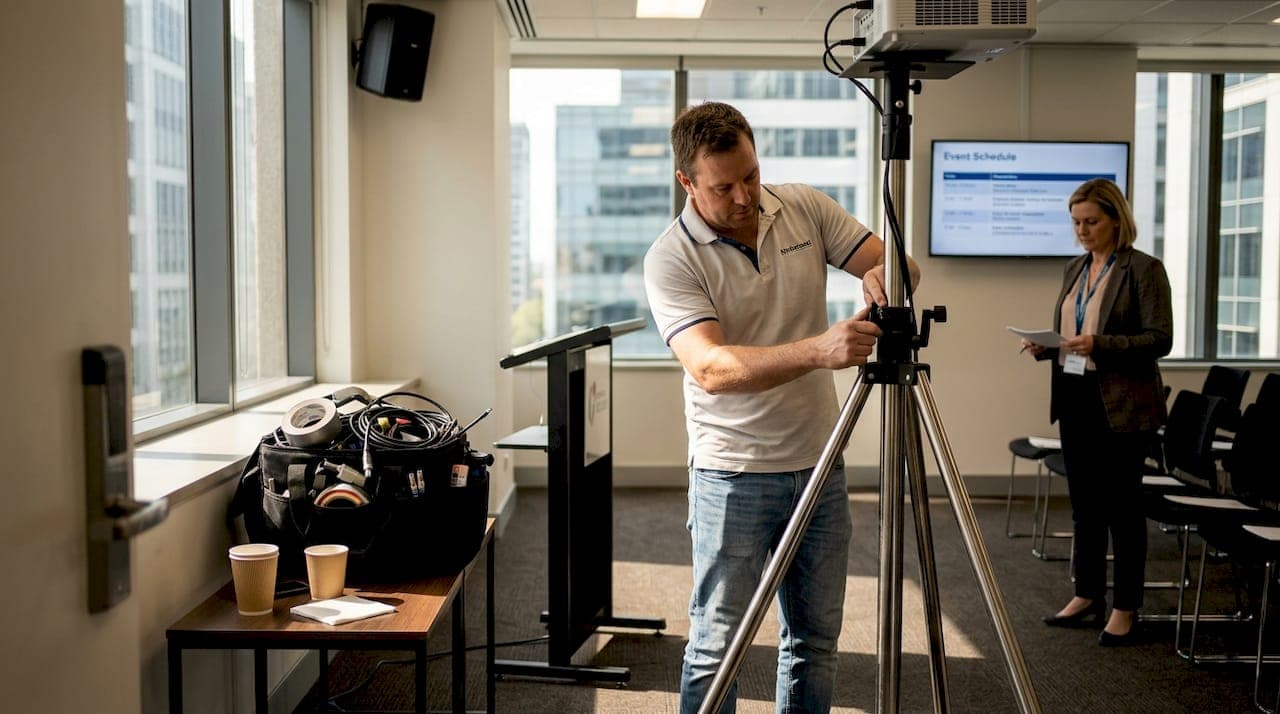
Technical reliability is the foundation. Even the most beautifully designed visuals fail if the equipment lets you down. Following proven AV best practices means scheduling full technical rehearsals, testing every transition, and having contingency plans ready.
Audience-centric design drives results. Ask yourself: what does this audience need to feel, understand, or do after this session? Design your visuals to answer that question, not to showcase how much information you have.
Pro Tip: Build your master slide deck at least one week before the event. This gives your AV team time to test every asset in the actual venue environment, reducing the risk of last-minute surprises.
| Principle | Weak approach | Strong approach |
|---|---|---|
| Simplicity | 10 bullet points per slide | One headline, one visual |
| Consistency | Mixed fonts and colours | Locked brand template |
| Reliability | No rehearsal | Full technical run-through |
| Audience focus | Presenter-led content | Outcome-led content design |
It is also worth remembering that audio matters just as much as visuals. A stunning display paired with poor sound quality will still frustrate your audience. The two must work together.
The research is clear: preparation, simplicity, and reliability maximise engagement. Apply these principles consistently and your presentations will land with far greater impact.
The technology behind visual presentations
With the basic principles clear, it is time to dig into the technology that can make or break your attendees' visual experience.
The core display options available to event organisers in Australia include:
- Projectors: Cost-effective for large rooms, but sensitive to ambient light. Best suited for venues where lighting can be controlled.
- Large-format screens: Sharp, bright, and reliable. Ideal for mid-size conference rooms and breakout sessions.
- LED walls: High-brightness, seamless displays that perform well in any lighting condition. The preferred choice for large-scale events and keynote stages.
- Lighting control systems: Programmable rigs that shift focus, set mood, and highlight speakers without manual adjustment during sessions.
Choosing the right technology depends on several factors:
| Factor | What to assess |
|---|---|
| Venue size | Screen size and throw distance for projectors |
| Ambient lighting | LED walls vs projectors based on light levels |
| Audience size | Number and placement of screens for clear sightlines |
| Content type | Video-heavy content needs higher refresh rate displays |
A thorough AV equipment guide will help you match technology to your specific event requirements. Before finalising your setup, review your essential AV equipment checklist to avoid overlooking critical components.
Pro Tip: Always request a site inspection with your AV provider before confirming your equipment list. Venue dimensions, ceiling heights, and power access can all affect which technology performs best in that space.
Technical failures during live events are almost always preventable. As the evidence shows, technical reliability is critical to engagement. Build AV troubleshooting protocols into your pre-event plan so your team can respond quickly if anything goes wrong on the day.
Strategies to maximise audience engagement
Now that you understand both what and how, let's uncover the practical techniques to turn your visuals into genuine audience engagement.
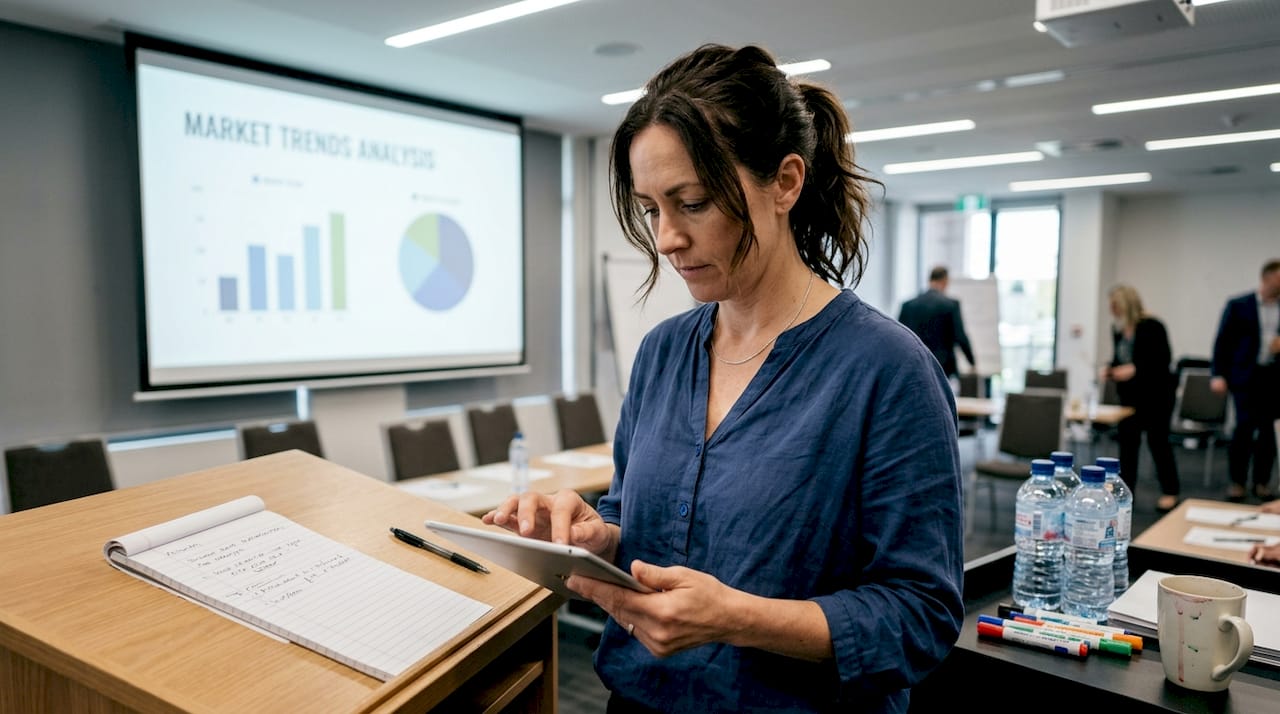
Pre-event preparation is everything. A master deck, a timed script, and at least one full dry run are non-negotiable. Presenters who rehearse with their visuals deliver with more confidence and fewer errors. The audience feels that confidence and responds to it.
Blend visuals with storytelling. Data alone does not move people. Pair your charts and infographics with a narrative that gives the numbers meaning. A single well-chosen image can anchor a story in an attendee's memory far longer than a slide full of statistics.
Tailor content to your event objectives. A product launch needs different visuals than a leadership summit or an industry panel. Match your visual strategy to the specific outcome you want attendees to walk away with.
Practical techniques that consistently lift engagement include:
- Live polls and Q&A tools: Interactive elements that invite participation and give attendees a stake in the session
- Short video segments: Two to three minute clips that break up presenter-led content and reset attention
- Motion graphics and animation: Subtle movement that guides the eye and illustrates processes more clearly than static images
- Consistent visual pacing: Advancing slides at a rhythm that matches the presenter's delivery, not faster or slower
Studies show that simplified, rehearsed, audience-focused visuals drive significantly higher engagement than unplanned or complex presentations.
Pro Tip: After each session, ask attendees to rate the clarity and usefulness of the visuals specifically. This targeted feedback is far more actionable than general event satisfaction scores.
Measuring success matters. Track session attendance rates, post-event survey scores, and social media mentions that reference specific visual moments. These KPIs tell you whether your AV solutions for engagement are delivering real value, and the AV advantages for your event's return on investment.
Measuring and improving your visual presentations
After the last delegate leaves, it is important to understand what worked and what did not, so you can keep improving for future events.
Start by collecting structured feedback. A short post-event survey with targeted questions about visual clarity, screen visibility, and content pacing gives you reliable data to act on. General satisfaction scores are useful, but specific visual feedback is what drives meaningful improvement.
Review the technical side with your AV team:
- Were there any signal dropouts or display failures during the event?
- Did slide transitions run smoothly across all sessions?
- Were there any sightline issues reported by attendees in specific seating areas?
- Did the lighting support or hinder visibility at key moments?
Update your decks based on what you learn. If a particular slide consistently confused attendees, simplify it. If a video segment generated strong positive feedback, plan more like it for the next event. Treat every event as a source of data, not just an outcome.
Ongoing liaison with your AV partner is one of the most underused improvement strategies available to organisers. A trusted provider who knows your events, your venues, and your audience can offer insights that no post-event survey will capture. Following established event AV best practices means building that relationship over time, not just engaging a supplier for individual events.
"Smart preparation and post-event review increase presentation impact more than any single design upgrade."
The organisers who consistently deliver standout visual experiences are the ones who treat improvement as a continuous process. Each event informs the next, and the standard keeps rising.
Our perspective: Why visual presentation is your silent sales pitch
Here is something that does not get discussed enough in the event industry: your visuals are noticed before your speakers open their mouths. The moment attendees walk into a room and see the staging, the screens, and the lighting, they form an impression of your organisation. That impression shapes how they receive everything that follows.
We have seen it repeatedly. Rushed or uninspired visuals erode credibility before a single word is spoken. Conversely, deliberate visual choices signal that your organisation values quality, respects its audience, and takes its message seriously. That perception carries real weight in how attendees remember your event and your brand.
The strategic role of visuals in brand trust is consistently underestimated. Every presentation is a silent ambassador for your organisation. Investing in thoughtful AV coordination is not just about avoiding technical failures. It is about actively building the reputation your events deserve. Treat your visual presentation as a strategic asset, and your audience will feel the difference.
Take your next event's visual presentation further
For organisers looking to turn insights into action, there is practical help available to ensure your next presentation impresses from the first slide to the final session.
At Conference Audio Visual, we specialise in end-to-end audio visual solutions tailored to the specific needs of corporate events and conferences across Australia. From display technology and lighting design to full event theming specialists who can transform your staging and environment, our experienced team handles every detail. If you are planning your next event and want to understand exactly what is involved, our event AV guide is a practical starting point. Get in touch with our team to discuss a tailored solution for your next conference.
Frequently asked questions
What are the key elements of a great visual presentation?
Simplicity, technical reliability, strong preparation, and message-focused visuals form the core of impactful visual presentations. As the research confirms, preparation, simplicity, and reliability are the foundations of effective audience engagement.
How do visual presentations impact attendee engagement?
Targeted, well-designed visuals increase attention, improve memory retention, and encourage attendee interaction at events. Evidence shows that preparation, simplicity, and reliability maximise engagement across corporate event formats.
What technology do I need for event visual presentations?
Essential technology can include projectors, large-format screens, LED walls, quality audio, and reliable networking, all tailored to your venue and audience size. Technical reliability is critical to ensuring your chosen technology performs when it matters most.
How can I improve my team's presentation visuals?
Rehears with your team, gather attendee feedback, and partner with professional AV providers to refine your deck and delivery for next time. Smart preparation and post-event review increase presentation impact more than any single design change.