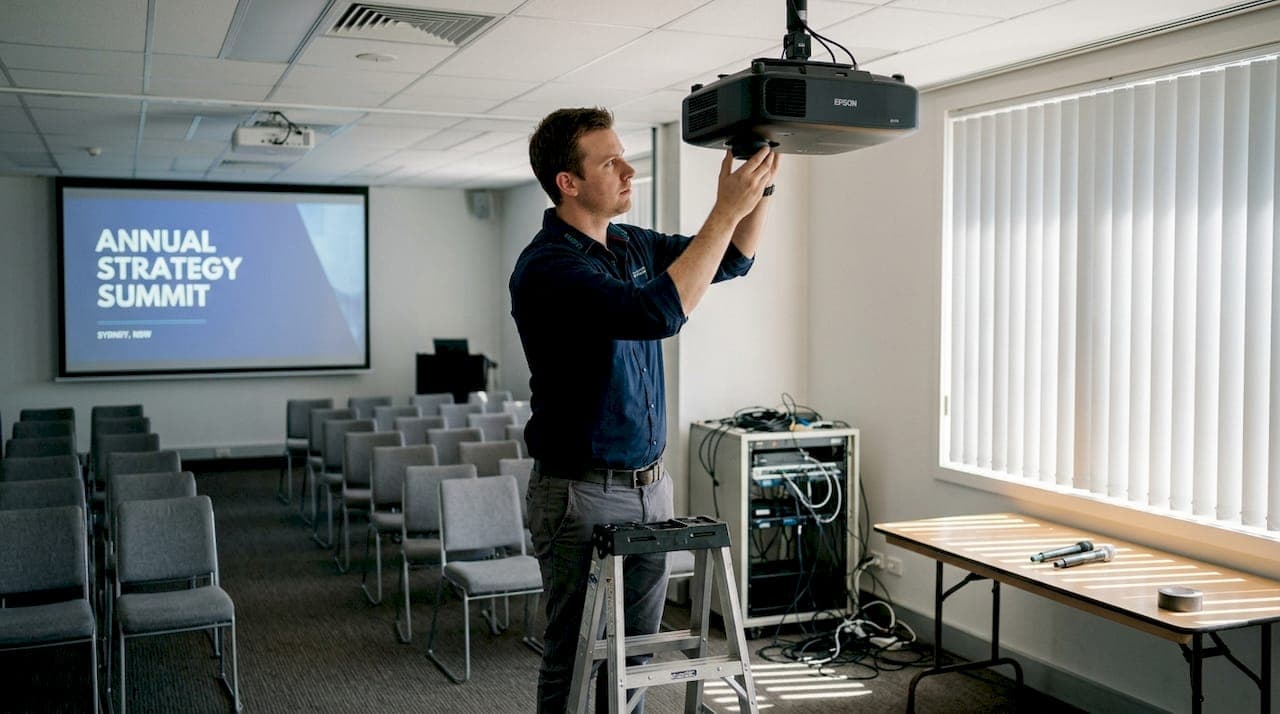
Many event organisers believe audio visual integration simply means setting up projectors and microphones on the day. In reality, audio visual integration is the process of connecting audio, visual, lighting, control, and interactive technologies into a unified system for seamless operation in events and corporate spaces. For Australian corporate planners managing conferences and business gatherings, understanding this comprehensive approach is critical to delivering memorable experiences that engage attendees and maximise return on investment. This guide explores the essential components, methodologies, challenges, and best practices that define successful AV integration for corporate events across Australia in 2026.
Table of Contents
- What is audio visual integration and its core components
- The audio visual integration process for corporate events
- Challenges and nuances of AV integration in Australian corporate events
- Maximising corporate event success with expert AV integration
- Enhance your corporate events with expert AV solutions
Key takeaways
| Point | Details |
|---|---|
| Unified technology system | Audio visual integration connects audio, visual, lighting and control technologies into one seamless system for corporate events. |
| Structured planning process | Successful integration requires needs assessment, site visits, design coordination, installation, testing and ongoing support. |
| Australian event challenges | Acoustic issues, hybrid equity, network delays and inadequate in-house venue AV require specialist expertise. |
| Significant ROI impact | Expert AV integration delivers up to 40% higher ROI and 42% greater attendee satisfaction for corporate events. |
| Budget allocation matters | Allocating 15 to 20% of event budgets to professional AV integration optimises outcomes and engagement. |
What is audio visual integration and its core components
Audio visual integration represents far more than connecting cables and positioning equipment. It's the strategic unification of multiple technology systems that work together to create immersive, reliable event experiences. For corporate events and conferences, this means every audio element synchronises with visual displays, lighting adapts to presentation content, and control systems allow seamless transitions between speakers and formats.
The core components of audio visual solutions include several interconnected technologies. Display systems encompass LED screens, projection surfaces, confidence monitors and digital signage that deliver visual content to audiences. Audio systems integrate wireless microphones, line arrays, mixing consoles and digital signal processors to ensure clear sound throughout venues. Lighting design coordinates intelligent fixtures, colour temperature control and automated dimming that enhance mood and focus attention. Control systems tie everything together through touchscreen interfaces, automation protocols and centralised management platforms.
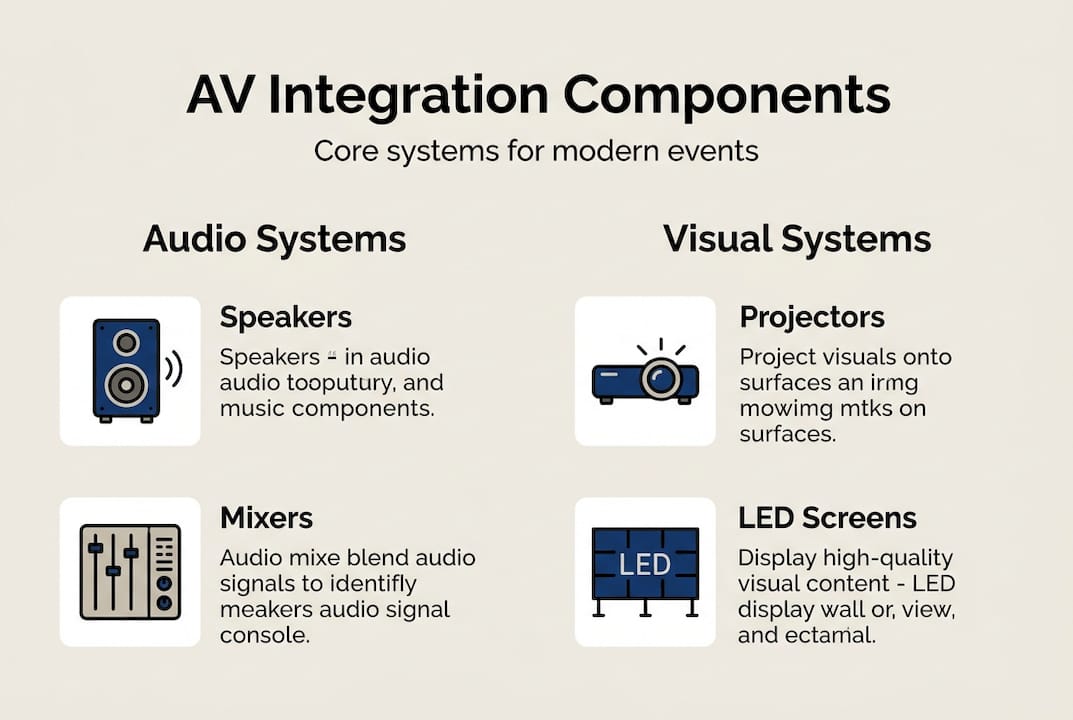
Each component must communicate effectively with others. When a presenter advances slides, lighting might automatically adjust. When video content plays, audio levels balance to maintain clarity. This orchestration creates professional experiences that keep attendees engaged and messages clear. Poor integration becomes immediately obvious through feedback loops, visual delays, inconsistent lighting or technical interruptions that undermine event credibility.
For Australian corporate environments, integration extends beyond individual rooms. Multi-space conferences require technology that scales across breakout areas, main stages and networking zones. Hybrid events demand additional layers connecting physical venues with virtual platforms, requiring robust network infrastructure and streaming capabilities. Understanding these components helps event organisers specify requirements accurately and evaluate provider capabilities effectively.
Pro Tip: Request detailed system diagrams from AV providers showing how components interconnect, including backup pathways for critical systems like audio and network connectivity.
The audio visual integration process for corporate events
Methodologies involve structured planning: assess needs, site visits, design integration with IT and building systems, installation, testing, on-site support, and post-event debrief. This comprehensive approach ensures nothing gets overlooked and every technical element supports event objectives. The process typically unfolds across several distinct phases, each building on previous work.
Needs assessment forms the foundation. During this phase, AV specialists consult with event organisers to understand audience size, presentation formats, branding requirements, accessibility needs and budget parameters. They identify whether events require simultaneous translation, audience response systems, recording capabilities or live streaming. This conversation shapes every subsequent decision about equipment selection and system design.
Site visits follow assessment. Technical teams inspect venues to evaluate acoustics, lighting conditions, power availability, network infrastructure and rigging points. They measure sight lines, identify potential interference sources and document existing systems. For hotels and conference centres, they assess whether in-house equipment meets requirements or whether supplementary systems are necessary. These visits often reveal challenges invisible during initial planning, allowing proactive solutions rather than day-of-event scrambling.
Design and integration planning translates requirements into technical specifications. Engineers create detailed drawings showing equipment placement, cable routing, control interfaces and signal flow. They coordinate with venue IT teams to ensure network capacity, firewall configurations and bandwidth allocation support streaming and interactive elements. For complex events, they design redundancy into critical systems, specifying backup projectors, duplicate audio paths and alternative power sources.
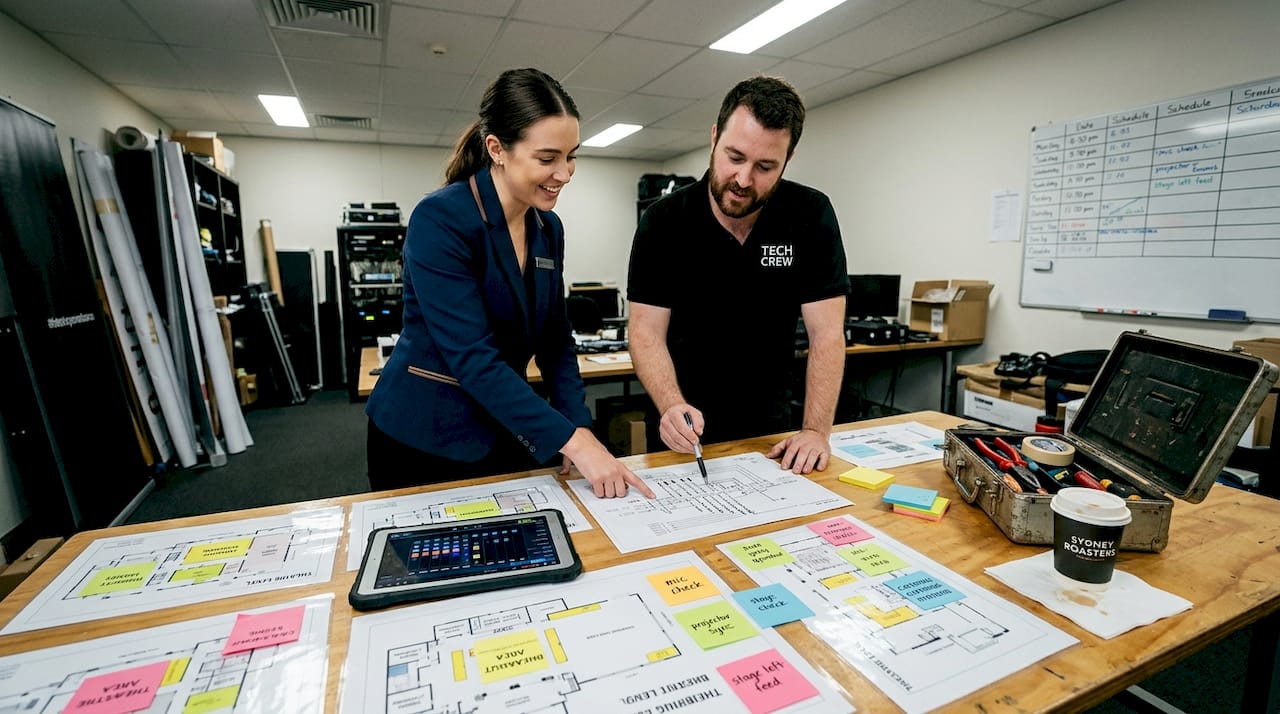
Installation, testing and support complete the AV event management process. Technicians arrive early to install equipment, run cables and configure systems. They conduct thorough testing under conditions matching actual event scenarios, including full audio checks at expected audience volumes and visual tests from various seating positions. During events, technical teams remain onsite to manage transitions, troubleshoot issues and adjust systems as needed. Post-event debriefs capture lessons learned and identify improvements for future gatherings.
Pro Tip: Involve AV integrators at least eight weeks before major corporate events to allow proper planning, equipment sourcing and coordination with other vendors, avoiding premium rush charges and limited equipment availability.
Challenges and nuances of AV integration in Australian corporate events
Australian venues present unique integration challenges that require specialist knowledge and experience. Acoustic challenges, hybrid equity issues, network delays, limitations of in-house AV, and power and network backups are common hurdles affecting event quality. Understanding these obstacles helps organisers set realistic expectations and budget appropriately for solutions.
Acoustic management tops the challenge list. Many Australian conference venues feature high ceilings, hard surfaces and open layouts that create reverberation and echo. Resort properties popular for corporate retreats often have glass walls and minimal sound treatment. These conditions make speech intelligibility difficult without proper microphone selection, speaker placement and digital signal processing. Simply increasing volume amplifies problems rather than solving them.
Hybrid event equity represents another significant challenge. Creating experiences where remote participants feel equally engaged as in-room attendees requires sophisticated camera systems, dedicated audio feeds and interactive platforms. Poor implementation leaves virtual audiences watching static wide shots with muffled audio, destroying engagement. Successful hybrid integration demands separate technical workflows for physical and digital audiences, often doubling equipment and staffing requirements.
Network and IT integration frequently causes delays and complications. Corporate events increasingly rely on live polling, social media integration, cloud-based presentations and streaming platforms. Venue networks designed for guest internet access rarely provide the bandwidth, quality of service prioritisation or security configurations these applications demand. Coordinating with venue IT teams, arranging dedicated circuits or deploying cellular bonding solutions adds complexity to integration projects.
In-house venue AV systems often fall short for sophisticated corporate events. Hotels and conference centres typically provide basic equipment suitable for simple presentations but lack the quality, flexibility and redundancy professional events require. Projectors may have insufficient brightness for daylit rooms. Audio systems might cover only primary spaces, leaving breakout areas underserved. Control interfaces often require technical expertise rather than intuitive operation organisers expect.
"The most frequent downfall we observe is audio quality mismatching visual production values. Stunning LED walls paired with inadequate sound systems create disconnected experiences that undermine event impact and attendee perception of professionalism."
Power and network backup systems separate professional integrations from basic setups. Australian venues occasionally experience power fluctuations or outages that would devastate events lacking redundancy. Professional integrators specify uninterruptible power supplies for critical equipment, maintain spare projectors and prepare failover network paths. These provisions add cost but provide insurance against catastrophic failures during high-stakes corporate gatherings.
These challenges explain why AV solutions for engagement require specialist providers rather than relying solely on venue capabilities. Experienced integrators anticipate obstacles, engineer solutions and maintain equipment inventories that address Australian venue realities effectively.
Maximising corporate event success with expert AV integration
The business case for professional AV integration extends well beyond technical reliability. Comprehensive AV boosts ROI by up to 40%, 42% higher attendee satisfaction, with 15 to 20% budget allocation optimal for Australian corporate events. These metrics demonstrate how quality integration transforms events from functional gatherings into strategic business tools that drive engagement, learning and relationship building.
Attendee satisfaction directly correlates with technical execution quality. When presentations flow smoothly, audio remains clear and visuals appear crisp, audiences focus on content rather than technical distractions. This attention translates to better information retention, more meaningful networking and stronger post-event sentiment. Conversely, technical problems create frustration that overshadows even excellent content and speakers.
Sponsor value increases substantially with professional AV integration. High-quality video walls showcase sponsor branding effectively. Reliable streaming extends sponsor exposure beyond physical attendees. Interactive displays in sponsor areas create engagement opportunities that justify investment. These enhanced activations help event organisers secure premium sponsorship rates and maintain long-term partnerships.
| Outcome measure | Without expert integration | With expert integration |
|---|---|---|
| Technical incidents per event | 8 to 12 disruptions | 0 to 2 minor issues |
| Attendee satisfaction scores | 68% positive ratings | 94% positive ratings |
| Sponsor renewal rates | 45% return sponsors | 78% return sponsors |
| Event ROI improvement | Baseline performance | 35 to 40% increase |
| Post-event content usage | Limited recording quality | Professional multi-camera edits |
Budget allocation significantly influences integration quality. While basic AV might consume 8 to 10% of event budgets, professional integration delivering measurable business outcomes typically requires 15 to 20% allocation. This investment covers superior equipment, experienced technical staff, redundant systems and comprehensive planning that prevents costly failures. Organisers who underinvest often spend more addressing problems than they would have paid for proper integration initially.
Best practices for Australian corporate event organisers include several key recommendations. Start customising AV solutions to boost corporate event impact during initial venue selection, evaluating technical capabilities alongside other factors. Engage expert AV solutions providers early in planning cycles to influence room layouts, staging designs and scheduling decisions. Specify scalable systems that accommodate audience size variations and format changes without complete redesigns. Prioritise hybrid capabilities even for primarily in-person events, providing flexibility as attendance patterns evolve.
Pro Tip: Measure AV integration success through engagement metrics like session attendance rates, audience interaction levels and content sharing statistics rather than solely technical uptime, aligning AV performance with business objectives.
Partner with Australian AV firms experienced in corporate conference environments who understand local venue characteristics, equipment availability and regulatory requirements. Request client references from similar events and review case studies demonstrating problem-solving capabilities. Ensure providers offer comprehensive services from initial consultation through post-event analysis, creating accountability for outcomes rather than just equipment delivery.
Key actionable recommendations for maximising success include:
- Allocate 15 to 20% of total event budgets to professional AV integration for optimal outcomes
- Conduct venue site visits with AV technical teams before finalising contracts to identify limitations early
- Specify equipment redundancy for all mission-critical systems including projection, audio and network connectivity
- Schedule full technical rehearsals at least one day before events to identify and resolve issues
- Establish clear communication protocols between event managers and technical directors during live events
- Capture high-quality recordings for post-event content marketing and sponsor deliverables
- Request detailed post-event technical reports identifying successes and improvement opportunities
These practices transform AV integration from a necessary expense into a strategic investment that differentiates events, enhances brand perception and delivers measurable business value for Australian corporate organisations.
Enhance your corporate events with expert AV solutions
Successful corporate events and conferences demand more than standard equipment setups. They require comprehensive audio visual integration that unifies technology, enhances engagement and delivers reliable experiences attendees remember positively. Professional AV providers bring technical expertise, quality equipment and proven methodologies that transform event objectives into reality.
Conference Audio Visual specialises in delivering expert audio visual solutions tailored to Australian corporate event requirements. Our services span initial consultation through post-event support, including comprehensive audio visual equipment hire and hands-on technical management. We understand the unique challenges Australian venues present and design integrated systems that overcome acoustic limitations, network constraints and hybrid event complexities. Our experienced teams work alongside event organisers to reduce stress, prevent technical failures and create seamless experiences that enhance your brand and engage your audiences. Partner with specialists who prioritise your success through dedicated account management, flexible solutions and unwavering commitment to technical excellence. Discover how strategic AV integration elevates your next corporate gathering by exploring our AV event management process and comprehensive service offerings.
Frequently asked questions
What exactly is audio visual integration for corporate events?
Audio visual integration is the process of connecting multiple technology systems including audio equipment, visual displays, lighting and control interfaces into one unified platform that operates seamlessly during corporate events. Rather than independent components, integrated systems communicate and coordinate to create cohesive experiences where presentations, sound, lighting and interactive elements work together reliably.
How does expert AV integration differ from using in-house venue equipment?
In-house venue AV typically provides basic equipment suitable for simple presentations but lacks the quality, flexibility and redundancy professional corporate events require. Expert integration delivers superior audio clarity, brighter projection, sophisticated control systems, backup equipment and experienced technical staff who manage complex requirements like hybrid streaming, multi-room coordination and interactive audience engagement that standard venue systems cannot support effectively.
Why does professional AV integration improve attendee experience significantly?
Professional integration eliminates technical distractions that break audience focus and creates immersive environments where content remains centre stage. Clear audio ensures every word reaches attendees regardless of seating position. Crisp visuals maintain engagement during presentations. Smooth transitions between speakers and formats maintain event momentum. These technical elements combine to create polished experiences that enhance learning, networking and overall satisfaction with corporate gatherings.
What percentage of event budgets should organisations allocate to AV integration?
Australian corporate events typically achieve optimal outcomes by allocating 15 to 20% of total event budgets to professional AV integration. This investment covers quality equipment, experienced technical staff, comprehensive planning, redundant systems and onsite support that prevent costly failures. While basic setups might cost less initially, professional integration delivers measurably higher ROI through improved attendee satisfaction, enhanced sponsor value and reduced technical incident rates.
Why do hybrid event setups require more sophisticated AV integration?
Hybrid events serve two distinct audiences with different technical needs simultaneously. In-room attendees require traditional presentation systems, clear audio and appropriate lighting. Remote participants need dedicated camera systems, separate audio feeds, streaming platforms and interactive tools that create engagement equivalent to physical attendance. Successfully balancing these requirements demands sophisticated integration with separate technical workflows, substantially more equipment and experienced operators managing both audiences effectively throughout events.
How early should event organisers engage AV integration specialists?
Engage audio visual consulting specialists at least eight weeks before major corporate events to allow proper needs assessment, system design, equipment sourcing and coordination with venues and other vendors. Earlier involvement during venue selection provides even greater value, allowing technical capabilities to influence space choices and avoiding venues with limitations that require expensive workarounds or compromise event quality.