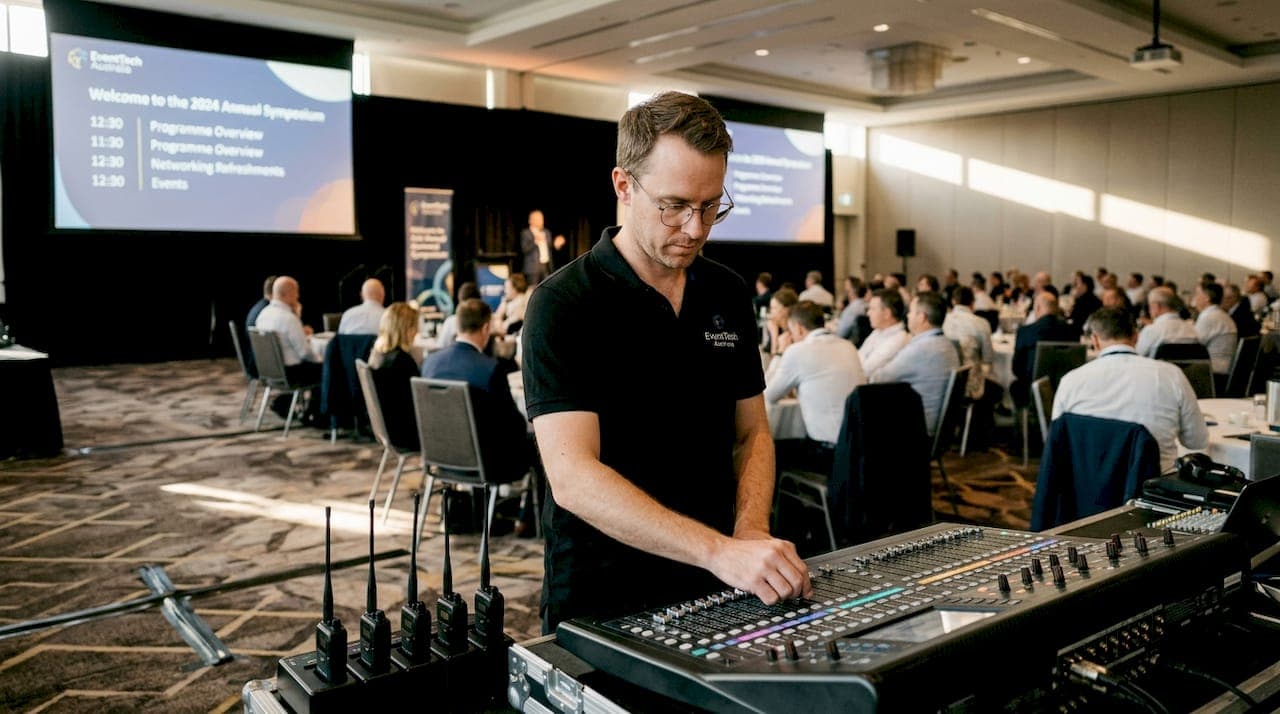
Most event planners believe AV technicians simply plug in microphones and press play, yet these professionals orchestrate every technical element that determines whether your corporate event captivates or collapses. From managing complex hybrid setups to troubleshooting split-second failures, AV technicians transform raw technology into seamless audience experiences. Understanding their multifaceted responsibilities empowers you to collaborate effectively, avoid costly disruptions, and deliver events that resonate long after attendees leave. This guide reveals what AV technicians actually do, the unique challenges they navigate in modern hybrid formats, and proven strategies for maximising their expertise at your next corporate gathering.
Table of Contents
- The core responsibilities of AV technicians at corporate events
- Challenges faced by AV technicians in modern hybrid events
- In-house venue AV vs external AV providers: understanding the distinctions
- Practical tips for collaborating effectively with AV technicians
- Discover expert AV technician services for your next event
Key takeaways
| Point | Details |
|---|---|
| Complex technology management | AV technicians orchestrate sophisticated equipment to ensure flawless audio-visual delivery throughout events |
| Coordination expertise | They bridge communication between in-house venue teams and external providers to prevent technical disruptions |
| Comprehensive event lifecycle | Their responsibilities span pre-event setup, real-time troubleshooting, and post-event wrap-up activities |
| Audience engagement enhancement | Skilled technicians directly elevate attendee experience and amplify event impact through technical excellence |
| Strategic planning value | Understanding their role helps planners optimise resource allocation and execution strategies |
The core responsibilities of AV technicians at corporate events
AV technicians handle far more than equipment placement. Their core roles of AV technicians encompass technical precision, creative problem solving, and seamless coordination that keeps events running without a hitch.
Before any attendee arrives, technicians conduct exhaustive equipment checks. They position microphones for optimal sound capture, calibrate projectors to match venue lighting conditions, and test every cable connection. This preparation phase determines whether your keynote speaker's words reach the back row or get lost in acoustic dead zones.
During live events, technicians operate mixing consoles, manage lighting transitions, and monitor audio levels continuously. They adjust microphone volumes as speakers move closer or further from podiums, switch between presentation slides precisely on cue, and balance background music to complement rather than overpower conversations. This real-time responsiveness requires technical knowledge combined with situational awareness that anticipates presenter needs before issues emerge.
When technical failures occur, and they inevitably do, technicians diagnose problems rapidly. A presenter's wireless microphone cutting out mid-sentence demands instant troubleshooting. Technicians swap batteries, switch frequencies to avoid interference, or deploy backup equipment within seconds. These swift interventions prevent awkward silences that undermine event professionalism.
Coordination extends beyond equipment to people. Technicians communicate with event managers about timing adjustments, brief presenters on microphone techniques, and synchronise with catering staff to avoid disruptive service during critical presentations. This interpersonal dimension separates competent technicians from exceptional ones.
Post-event responsibilities include systematic equipment breakdown, cable organisation for future use, and documenting any technical issues for continuous improvement. Proper pack-down protects expensive gear and ensures readiness for subsequent events.
Pro Tip: Schedule a dedicated technical rehearsal 24 hours before your event. This allows AV technicians to identify venue-specific challenges like unexpected acoustic reflections or lighting conflicts that standard setup procedures might miss.
Key technician duties include:
- Conducting comprehensive pre-event equipment testing and calibration
- Operating audio mixing consoles and visual display systems during live presentations
- Executing rapid troubleshooting protocols when technical issues arise
- Coordinating timing and logistics with event managers and presenters
- Performing systematic post-event equipment breakdown and maintenance checks
Challenges faced by AV technicians in modern hybrid events
Hybrid events multiply technical complexity exponentially. Technicians must simultaneously serve in-person audiences expecting immersive experiences and remote participants demanding broadcast-quality streams. This dual focus creates unique pressure points that test even seasoned professionals.
Balancing technology for physical and virtual attendees requires parallel system management. While in-room speakers need powerful amplification, remote viewers require carefully mixed audio feeds that eliminate echo and background noise. Video cameras capturing presenters for streaming must avoid obstructing sight lines for seated attendees. Lighting bright enough for cameras can feel harsh for in-person participants. These competing requirements demand constant calibration.
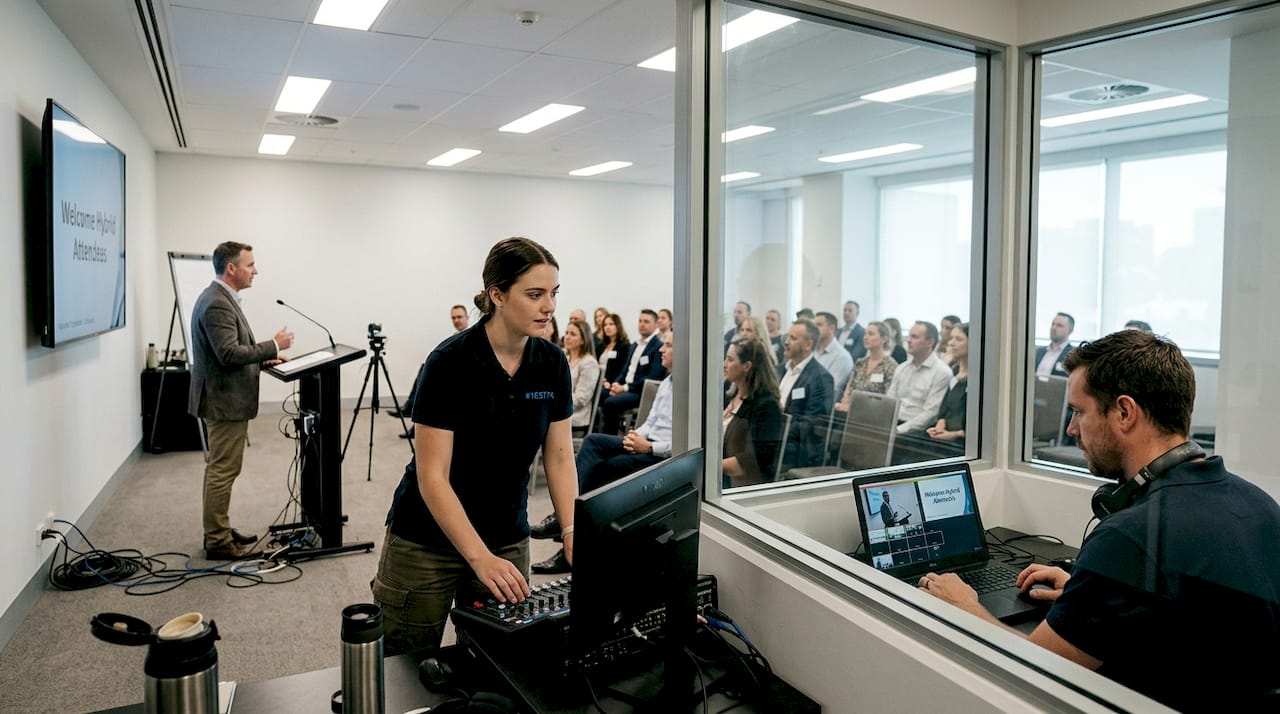
Integrating venue in-house AV systems with external provider equipment introduces compatibility challenges. Different manufacturers use proprietary connection standards. A venue's installed projector might not accept signals from your external video switcher without adapters. Audio mixing consoles from competing brands require technicians to navigate unfamiliar interfaces under time pressure. Coordinating AV equipment tips become essential when merging diverse technical ecosystems.
Technical risks escalate in hybrid formats. Network latency creates audio lag between speakers and remote questions, disrupting natural conversation flow. Bandwidth limitations degrade video quality precisely when a presenter shares detailed charts. Platform crashes during peak attendance moments leave virtual audiences disconnected. Technicians maintain backup internet connections, redundant streaming servers, and alternative communication channels to mitigate these failures.
Coordination complexity increases with multiple teams managing different event components. In-house venue technicians control building infrastructure like network access and power distribution. External AV providers supply specialised AV equipment for hybrid events including cameras and encoders. Virtual platform administrators manage breakout rooms and audience polling. Without clear role definitions, critical tasks fall through gaps or duplicate efforts waste resources.
Engaging both audience segments equally presents ongoing challenges. In-person attendees naturally dominate presenter attention through visible reactions and immediate questions. Remote participants risk becoming passive observers unless technicians implement interactive features like live polling, chat moderation, and virtual Q&A queues. Maintaining energy parity requires deliberate technical and facilitation strategies.
Hybrid events require equal treatment of remote and in-person audiences to avoid a 'second-class' experience, demanding extra AV expertise that balances competing technical requirements while maintaining seamless interaction across physical and digital spaces.
Common hybrid event challenges include:
- Simultaneous optimisation of audio and video for vastly different viewing contexts
- Integration of incompatible equipment from multiple vendors and providers
- Management of network reliability and bandwidth allocation for streaming stability
- Coordination across fragmented teams with overlapping technical responsibilities
- Implementation of engagement strategies that serve both audience types equitably
In-house venue AV vs external AV providers: understanding the distinctions
Choosing between venue in-house AV teams and external providers significantly impacts event execution. Each option delivers distinct advantages that suit different event requirements and budget constraints.
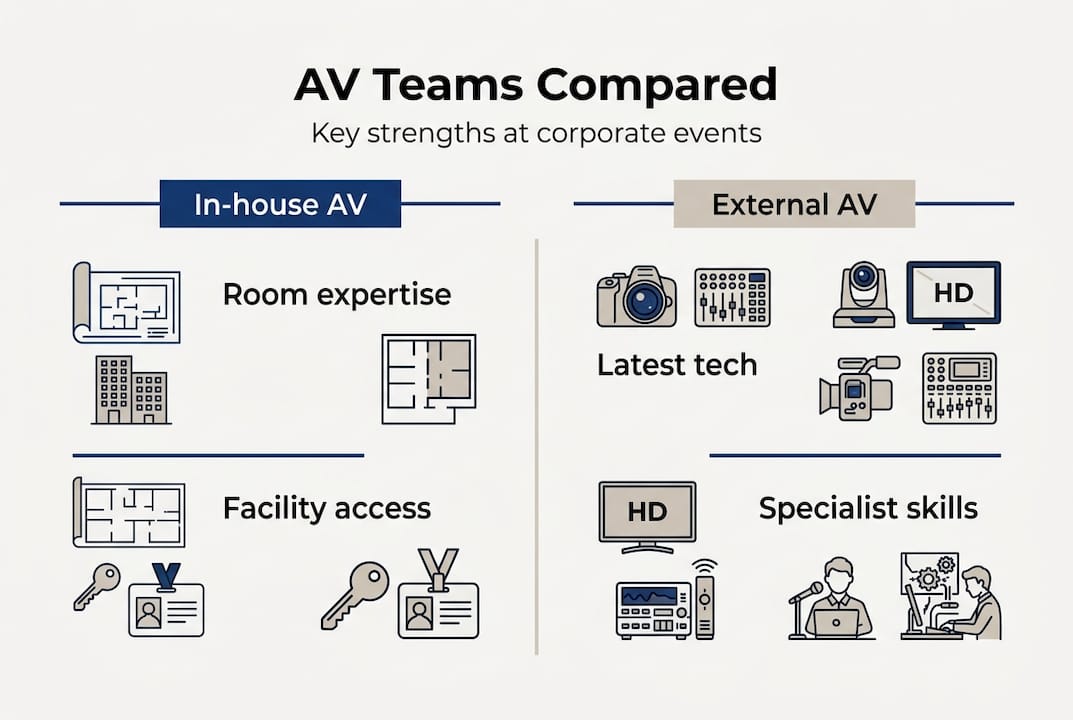
In-house venue AV teams offer intimate facility knowledge. They understand acoustic properties of specific rooms, know which power outlets support heavy equipment loads, and maintain relationships with venue management that expedite last-minute adjustments. This familiarity enables faster setup and reduces unexpected technical surprises. However, in-house teams often work with limited equipment inventories focused on standard conference formats rather than specialised productions.
External AV providers bring cutting-edge technology and specialised expertise. They invest in the latest cameras, mixing consoles, and projection systems that venues cannot justify purchasing. Their technicians receive advanced training on emerging technologies like augmented reality displays and spatial audio systems. This specialisation suits high-profile events demanding premium production values. The tradeoff involves higher costs and potential unfamiliarity with venue-specific quirks.
Hybrid approaches combining resources from both sources create powerful solutions but demand meticulous coordination. An external provider might supply broadcast cameras and streaming infrastructure while in-house technicians manage room audio and lighting. Success requires clear delineation of responsibilities, compatible equipment standards, and unified communication protocols. Without proper planning, technical handoffs between teams introduce failure points.
| Aspect | In-house venue AV | External AV providers |
|---|---|---|
| Venue knowledge | Deep familiarity with facility infrastructure and acoustic properties | Limited initial venue understanding requiring advance site visits |
| Equipment range | Standard conference gear suitable for typical corporate events | Specialised advanced technology for premium production requirements |
| Setup efficiency | Faster deployment leveraging existing venue relationships | Longer setup compensated by sophisticated technical capabilities |
| Cost structure | Often bundled with venue rental creating perceived savings | Separate itemised pricing reflecting specialised equipment and expertise |
| Technical expertise | Generalist skills covering common event formats | Specialist knowledge in emerging technologies and complex productions |
Cost considerations extend beyond hourly rates. In-house AV might appear cheaper initially but offer limited equipment selection that compromises event quality. External providers charge premium rates yet deliver production values that justify investment for flagship corporate events. Calculate total value rather than comparing line items.
Logistics influence provider selection significantly. Small venues with basic AV needs benefit from in-house simplicity. Large multi-day conference AV comparison scenarios often require external provider capacity and equipment depth. Event scale, technical complexity, and quality expectations should drive decisions.
Clear communication prevents service gaps regardless of provider choice. Document technical requirements comprehensively, specify equipment standards explicitly, and establish escalation procedures for resolving disputes. Ambiguity about who supplies wireless microphones or manages streaming platforms creates last-minute scrambles that undermine event success.
Pro Tip: Request a joint planning session when combining in-house and external AV resources. Having both teams collaboratively map equipment placement, cable routing, and responsibility boundaries eliminates confusion and builds working relationships before event day pressure arrives.
Key decision factors include:
- Venue familiarity versus specialised equipment access tradeoffs
- Budget allocation between perceived savings and production quality outcomes
- Event complexity matching provider capabilities and resource depth
- Coordination requirements when integrating multiple AV sources
- Long-term relationship value for recurring event programmes
Practical tips for collaborating effectively with AV technicians
Maximising AV technician contributions requires intentional collaboration strategies. These practical approaches transform technicians from service vendors into strategic event partners.
-
Establish clear roles and expectations during initial planning conversations. Define who manages equipment selection, who coordinates with presenters, and who handles troubleshooting authority. Document these agreements in writing to prevent confusion when event pressure mounts.
-
Share comprehensive event details well before setup begins. Provide detailed agendas including session lengths, presenter transitions, and multimedia requirements. Specify technical needs like microphone types, screen formats, and audio recording preferences. The more information technicians receive upfront, the better they anticipate and prepare for your needs.
-
Include AV technicians in rehearsals and briefings alongside presenters. Technicians who understand presentation flow, slide timing, and speaker preferences deliver smoother technical support. Rehearsals reveal issues like inadequate microphone coverage or confusing slide transitions that adjustments can fix before attendees arrive.
-
Remain open to technician recommendations and alternative solutions. Experienced technicians have resolved countless technical challenges and often suggest approaches you have not considered. A technician recommending lavalier microphones over handheld options likely recognises your presenters need hands-free mobility. Trust their expertise.
-
Prepare contingency plans collaboratively for likely technical failures. Identify backup equipment, establish communication protocols when primary systems fail, and designate decision-makers authorised to approve quick solutions. Planning failure responses reduces panic when problems inevitably emerge.
-
Provide accessible workspace and resources technicians need for optimal performance. Ensure adequate power access near equipment locations, secure storage for gear between event days, and catering access so technicians maintain energy during long events. Small accommodations demonstrate respect that motivates exceptional service.
-
Debrief after events to capture improvement insights. Discuss what worked well technically, identify areas needing adjustment, and document lessons for future events. This continuous improvement mindset strengthens long-term working relationships and elevates subsequent event quality.
Pro Tip: Create a shared digital document accessible to both planning teams and AV technicians. Update this living document with real-time changes to schedules, presenter requirements, or technical specifications. This transparency eliminates miscommunication that causes preventable technical issues.
Close collaboration with technicians directly correlates with audience engagement levels and overall event success. When planners and technicians function as unified teams rather than separate vendors, events achieve technical excellence that amplifies content impact.
Discover expert AV technician services for your next event
Transforming event concepts into flawless technical execution requires experienced AV technicians services who understand both technology and audience dynamics. Conference Audio Visual specialises in delivering comprehensive AV solutions tailored specifically for corporate events, conferences, and business gatherings across Australia.
Our technicians bring deep expertise managing complex hybrid setups, coordinating diverse equipment ecosystems, and troubleshooting under pressure. We combine technical proficiency with personalised service, assigning dedicated account managers who understand your unique event requirements. Whether you need AV equipment hire in Melbourne for a single-day seminar or full-service expert audio visual solutions for multi-day conferences, our team ensures technology enhances rather than distracts from your event objectives. Reduce stress, elevate production quality, and deliver memorable attendee experiences with professional AV support designed for Australian corporate events.
Frequently asked questions
What qualifications do AV technicians typically hold?
Many AV technicians hold certifications from industry bodies like AVIXA or manufacturers such as Shure and QSC. Formal qualifications often include diplomas in audio engineering, event production, or broadcast technology. Practical experience with industry-standard equipment and software platforms remains equally valuable, with seasoned technicians accumulating knowledge through thousands of live event hours.
How do AV technicians handle unexpected technical issues during events?
Technicians perform rapid diagnostic assessments using systematic troubleshooting protocols to isolate problem sources quickly. They maintain backup equipment including spare microphones, cables, and mixing consoles ready for immediate deployment. Communication with event organisers occurs through discrete channels like headsets or messaging apps, enabling swift coordination without disrupting attendee experiences. Experienced technicians anticipate common failure modes and position redundant systems strategically.
What should event planners provide to AV technicians before an event?
Planners should supply detailed event schedules including session timing, presenter transitions, and break periods. Technical specifications covering required microphone types, screen formats, recording needs, and streaming platforms help technicians prepare appropriate equipment. Presenter requirements such as mobility preferences, accessibility needs, and multimedia file formats ensure proper setup. Venue layout diagrams, platform access credentials, and contact information for key stakeholders complete essential pre-event information.
Can external AV providers integrate smoothly with venue in-house technicians?
Yes, successful integration occurs regularly when teams establish clear role definitions and communication protocols early. Hybrid setups require coordination to ensure seamless service and equal audience experience across technical boundaries. Joint planning sessions where both teams map equipment responsibilities, cable routing, and handoff procedures prevent conflicts. Compatible equipment standards and unified troubleshooting protocols further support smooth collaboration. Proper planning transforms potential friction points into complementary strengths that enhance overall event quality.