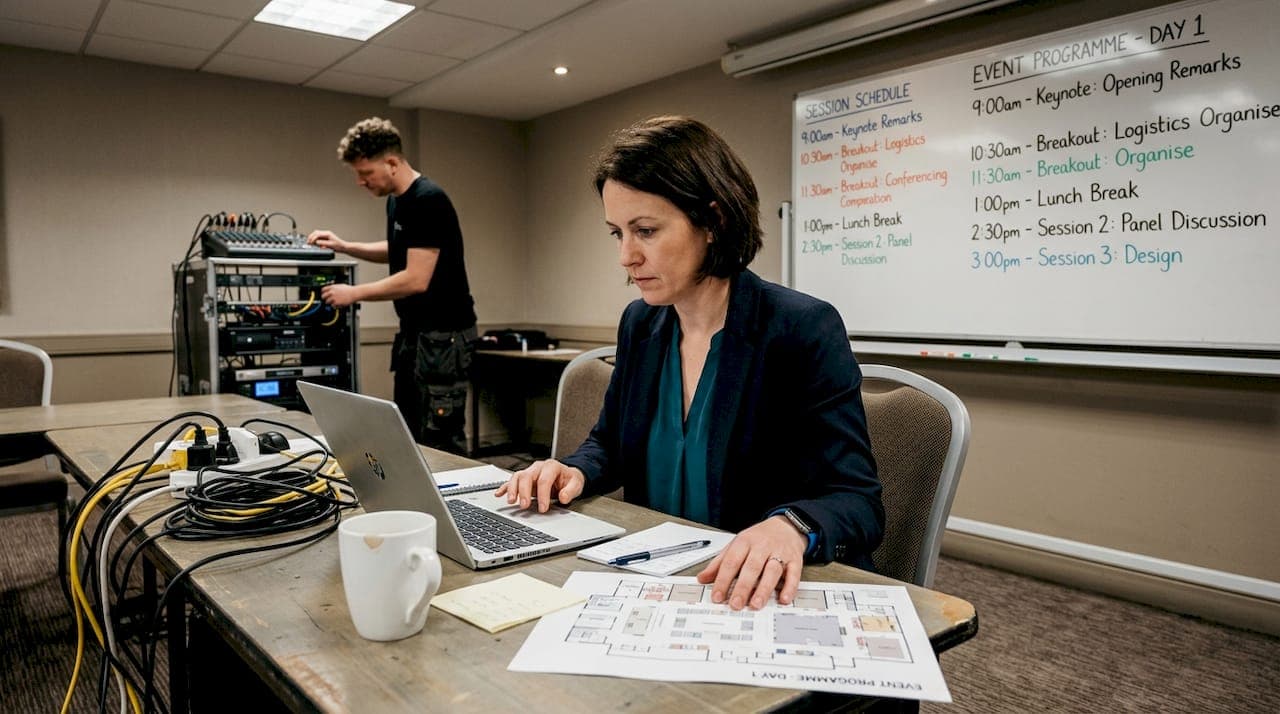
Audio visual technology is the backbone of every successful corporate event. Get it right, and you create an experience that drives genuine business outcomes. Get it wrong, and even the most carefully planned conference falls flat. Strategic audiovisual integration delivers 42% higher attendee satisfaction, 35% better networking, and up to 40% ROI increase for corporate events. For Australian conference planners, understanding which AV practices actually move the needle is essential. This article walks you through expert-backed strategies, from foundational planning to measuring real ROI, so your next event delivers on every level.
Table of Contents
- Foundation of effective audio visual planning
- Top AV solutions and equipment for business events
- Boosting networking and engagement with strategic AV
- Assessing AV impact: metrics, feedback and ROI
- Taking AV beyond basics: what most event planners miss
- Expert AV solutions for seamless corporate events
- Frequently asked questions
Key Takeaways
| Point | Details |
|---|---|
| Strategic AV planning | Early, detailed AV planning leads to higher satisfaction and event ROI. |
| Hybrid event advantages | Hybrid setups increase attendance and reduce costs compared to in-person only. |
| Engagement maximised | Interactive AV formats boost networking and attendee engagement. |
| Measurable ROI impact | Tracking key AV metrics proves tangible ROI improvements for stakeholders. |
| Continuous improvement | Post-event reviews and cross-team collaboration set exceptional events apart. |
Foundation of effective audio visual planning
Every high-performing corporate event starts with a solid AV plan. Without one, even premium equipment fails to deliver. The planning phase is where experienced organisers separate themselves from the rest, and it begins well before the first delegate arrives.
Here are the core steps every organiser should follow:
- Conduct a thorough venue assessment. Understand the room acoustics, ceiling height, power supply, and existing infrastructure before selecting any equipment.
- Define clear AV objectives. Know whether your priority is audience engagement, broadcast quality, hybrid streaming, or all three. Objectives shape every equipment decision.
- Select equipment matched to your audience size and format. A 50-person boardroom briefing needs a very different setup from a 1,000-delegate plenary session.
- Assign dedicated technical support. On-site AV technicians are not optional for major events. They manage live troubleshooting and ensure the programme runs without interruption.
- Build a risk mitigation plan. Identify single points of failure and prepare backup systems for audio, display, and connectivity.
Poor AV planning has real consequences. Technical failures during keynote presentations, inaudible speakers, or laggy video feeds erode credibility and frustrate attendees. Strategic AV integration consistently boosts attendee satisfaction and overall event ROI, which is why treating AV as a strategic priority rather than a logistical afterthought matters so much.
Our conference AV guide covers the full scope of what professional AV planning involves, and understanding the complete AV event management process helps organisers anticipate every stage from pre-production through to pack-down.
"The best AV plans are built around the attendee experience first, and the equipment list second."
Pro Tip: Start AV planning at least six months before a major conference. This gives you time to assess venues properly, negotiate with suppliers, and rehearse technical run-throughs without pressure.
Top AV solutions and equipment for business events
Once your planning foundations are in place, the next step is selecting the right AV solutions for your specific event format. The market offers a wide range of options, and the best choice depends on your audience, budget, and objectives.
AV essentials for any corporate event include:
- Sound systems: Line array speakers, wireless microphones, and digital mixing desks for clear, consistent audio across all room sizes.
- Visual displays: LED walls, projection screens, and confidence monitors for presenters.
- Lighting: Intelligent stage lighting, uplighting, and follow spots to set the right atmosphere and highlight key moments.
- Staging: Modular stage systems, lecterns, and branded set pieces that frame the event professionally.
When it comes to event format, the three main AV setups are fully onsite, hybrid, and virtual. Each has distinct advantages.
| Setup type | Best for | Key advantage | Key consideration |
|---|---|---|---|
| Fully onsite | Large conferences, gala events | Maximum production quality | Higher per-attendee cost |
| Hybrid | Mixed in-person and remote audiences | Expands attendance, reduces cost | Requires dual-stream production |
| Virtual | Remote-only audiences | Lowest venue cost | Engagement harder to sustain |
Hybrid formats in particular have reshaped the corporate events landscape. They expand attendance significantly while reducing per-attendee cost, making them a smart choice for organisations managing tight budgets without sacrificing reach.
Exploring the range of AV setup types available helps you match technology to your event goals. Effective AV equipment coordination is equally important, ensuring all components work together seamlessly rather than as isolated pieces.
Pros and cons at a glance:
- Fully onsite: Highest production value, but requires larger budget and venue capacity.
- Hybrid: Flexible and scalable, but demands experienced operators managing two simultaneous audiences.
- Virtual: Cost-effective and accessible, but engagement and networking are harder to facilitate.
Boosting networking and engagement with strategic AV
AV technology does far more than display slides and amplify voices. When used strategically, it actively shapes how attendees interact, engage with content, and connect with each other. This is where the real return on your AV investment becomes visible.
Interactive AV formats are among the most effective tools available to conference planners today. Live polling systems, digital Q&A platforms, and audience response technology transform passive attendees into active participants. When delegates feel involved rather than lectured to, engagement levels rise sharply.
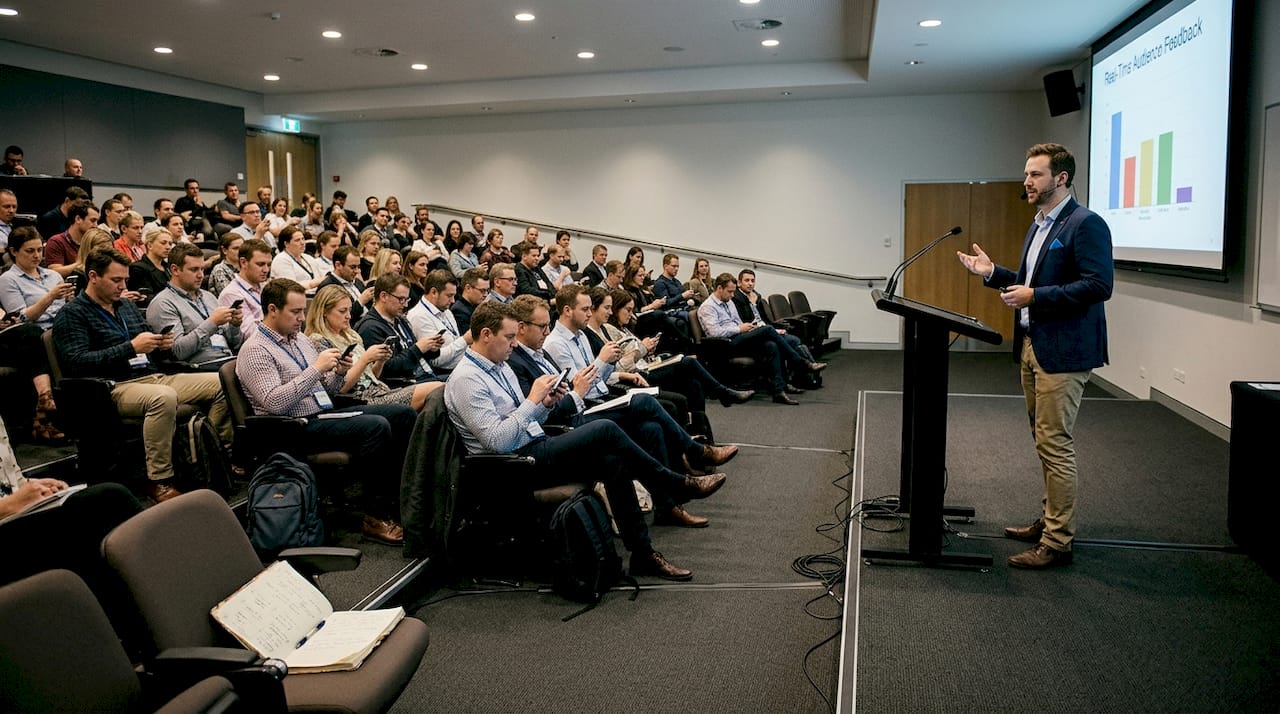
Strategic AV achieves 35% better networking and 42% higher attendee satisfaction compared to events without a deliberate AV strategy. These are not marginal gains. They represent a fundamental shift in how your event is experienced and remembered.
Practical ways to boost engagement using AV:
- Integrate live polling tools such as Slido or Mentimeter directly into your presentation displays.
- Use large-format LED screens to show real-time social media feeds and attendee comments.
- Deploy directional microphones and roving mics to facilitate open Q&A sessions.
- Set up breakout room AV systems that support small-group discussions with equal audio and visual quality.
- Use dynamic lighting changes to signal transitions between sessions and maintain energy levels.
Audio clarity deserves special attention. Poor sound quality is the single biggest driver of disengagement at corporate events. When attendees strain to hear a speaker, they disengage within minutes. Investing in quality sound reinforcement is never a place to cut costs.
Exploring engaging AV solutions gives you a clearer picture of what modern technology can deliver, and understanding seamless AV technology helps you integrate these tools without disrupting your event flow.
Pro Tip: Use event apps integrated with your AV systems to capture live feedback during sessions. This data is invaluable for post-event analysis and helps you refine your approach for future conferences.
Assessing AV impact: metrics, feedback and ROI
With engagement strategies in place, the next priority is measuring their effectiveness. Demonstrating AV value to stakeholders requires concrete data, not anecdotal impressions. A structured measurement framework makes this straightforward.
Step-by-step feedback collection process:
- Set baseline metrics before the event. Define your target satisfaction score, networking activity rate, and budget efficiency ratio.
- Deploy real-time feedback tools during the event. Use live polling and session ratings to capture in-the-moment responses.
- Distribute post-event surveys within 24 hours. Response rates drop sharply after this window closes.
- Analyse AV-specific feedback separately. Ask targeted questions about sound quality, visual clarity, and technical reliability.
- Compare results against baseline and previous events. Trend data is more useful than single-event snapshots.
| AV metric | Typical baseline | With strategic AV | Improvement |
|---|---|---|---|
| Attendee satisfaction | 65% | 92% | +42% |
| Networking effectiveness | 55% | 74% | +35% |
| Overall event ROI | Standard | Up to 40% increase | Significant |
Tracking the audio impact on ROI gives you a direct line of sight between AV investment and business outcomes. This is the kind of evidence that justifies AV budgets to finance teams and executive sponsors.
"Measuring AV performance is not a post-event task. It starts at the planning stage, when you define what success looks like in specific, measurable terms."
Key performance metrics to track consistently include attendee satisfaction scores, session retention rates, networking activity levels, and the ratio of AV spend to overall event ROI. Together, these give you a complete picture of what your AV investment actually delivered.
Taking AV beyond basics: what most event planners miss
Here is something we have observed consistently across large-scale Australian conferences: even well-resourced events underperform when AV planning stays siloed within the technical team. The planners who achieve the best outcomes treat AV as a cross-disciplinary function, not a separate department.
The most common oversight is designing AV systems around equipment capability rather than attendee experience. The question should never start with "what gear do we have?" It should start with "what do we want attendees to feel and do?" That shift in thinking changes every decision that follows.
Innovation matters here too. We encourage planners to experiment with formats, whether that means immersive event theming, spatial audio configurations, or gamified audience participation. The events that stand out are the ones willing to try something different.
Pro Tip: Run a post-event AV review with all stakeholders, including your AV supplier, event manager, and a sample of attendees. The insights from that conversation will sharpen your next event more than any single technology upgrade.
Continuous improvement is the real competitive advantage. Every event teaches you something, but only if you build a process to capture and act on those lessons.
Expert AV solutions for seamless corporate events
The best practices covered in this article only deliver results when they are backed by the right expertise and equipment. Knowing what to do is one thing. Having a trusted partner to execute it is another.
At Conference Audio Visual, we specialise in delivering tailored AV management and hire solutions for corporate events and conferences across Australia. From initial venue assessment through to post-event review, our experienced team manages every technical detail so you can focus on your programme and your people. Whether you are planning a hybrid summit or a large-scale gala, our event AV guide is a great starting point, and our team is ready to build a customised solution around your specific goals. Explore our AV tech explained resource to understand exactly what modern AV can do for your next event.
Frequently asked questions
What is the best way to plan AV for a major conference?
Begin AV planning at least six months in advance, define clear event objectives, and consult with AV experts for technical requirements. Strategic AV planning consistently delivers 42% higher attendee satisfaction when implemented from the outset.
How does a hybrid AV setup increase attendance and lower costs?
Hybrid events can expand attendance by 45% and reduce per-attendee cost by 33%, while maintaining high audience engagement through dual-stream production.
What are the key AV metrics to track for ROI?
Track attendee satisfaction scores, networking effectiveness, and session retention rates to assess AV performance. Strategic AV delivers up to 40% ROI increase when these metrics are monitored and acted upon.
Can poor AV management affect business outcomes?
Yes, ineffective AV significantly reduces attendee satisfaction and undermines networking opportunities. Poor AV execution can erode delegate confidence in your organisation and reduce the overall value of your event investment.