TL;DR:
- Proper AV integration significantly boosts attendee satisfaction and event ROI.
- Evaluating venue-specific factors ensures optimal AV solutions for different event sizes and formats.
- Embracing hybrid, sustainable, and scalable AV trends enhances future-proofing and engagement.
Getting the audio visual right at a corporate event is not a detail — it is the difference between a forgettable afternoon and a genuinely impactful experience. Poor sound, dim displays, or a dropped video feed can undermine even the most carefully planned programme. Strategic AV integration has been shown to boost ROI by up to 40%, lift attendee satisfaction by 42%, and increase attendance at hybrid events by 45%. This article gives you a practical, step-by-step guide to evaluating, comparing, and selecting the best AV solutions for your venue — so your next corporate conference lands exactly as intended.
Table of Contents
- How to evaluate AV solutions for your venue
- Top AV solutions for different venue types
- Comparing AV solution features and ROI
- AV solution trends: hybrid, sustainability, and future-proofing
- What most planners miss about AV success
- Bring your events to life with professional AV solutions
- Frequently asked questions
Key Takeaways
| Point | Details |
|---|---|
| AV drives event ROI | Strategically chosen AV boosts event ROI by up to 40% and delivers measurable attendee benefits. |
| Match AV to venue | Successful events begin with AV tailored to the venue’s size, layout, and attendee needs. |
| Hybrid tech expands reach | Hybrid AV can increase attendance by 45% and lower costs for Australian corporate events. |
| Invest for experience | Comprehensive AV planning improves satisfaction, networking, and knowledge retention for delegates. |
How to evaluate AV solutions for your venue
To help you get started, let's break down what you should look for when choosing AV for your venue. The right solution is never one-size-fits-all. Room dimensions, ceiling height, audience numbers, and event format all shape what technology you actually need.
A small boardroom briefing has very different requirements from a 500-seat plenary session. Understanding those differences before you engage a supplier saves time, reduces cost overruns, and protects your event from technical surprises on the day. Getting the event AV basics right from the outset is one of the most reliable ways to protect your budget and your reputation as a planner.
Here is a practical checklist to guide your venue assessment:
- Room capacity and layout: Will the audience be seated theatre-style, in rounds, or in a U-shape? Each layout affects speaker placement, screen positioning, and sightlines.
- Existing infrastructure: Does the venue have built-in AV systems, or will everything need to be brought in? Older venues often require additional cabling and signal distribution equipment.
- Lighting conditions: Natural light through windows can wash out projected images. Check for blackout blinds or plan for high-brightness LED displays.
- Power availability: High-output AV rigs draw significant power. Confirm available circuits and load capacity with the venue early.
- Connectivity requirements: Will you need wired networking, Wi-Fi, or both? Hybrid events demand reliable, high-speed internet as a non-negotiable.
- Accessibility needs: Hearing loops, captioning displays, and assistive listening devices may be required for inclusive events.
Well-matched AV solutions correlate with 42% higher attendee satisfaction, which makes this evaluation stage one of the highest-value investments of your planning time. Exploring AV for business gatherings can also help you understand how different event types call for different technical approaches.
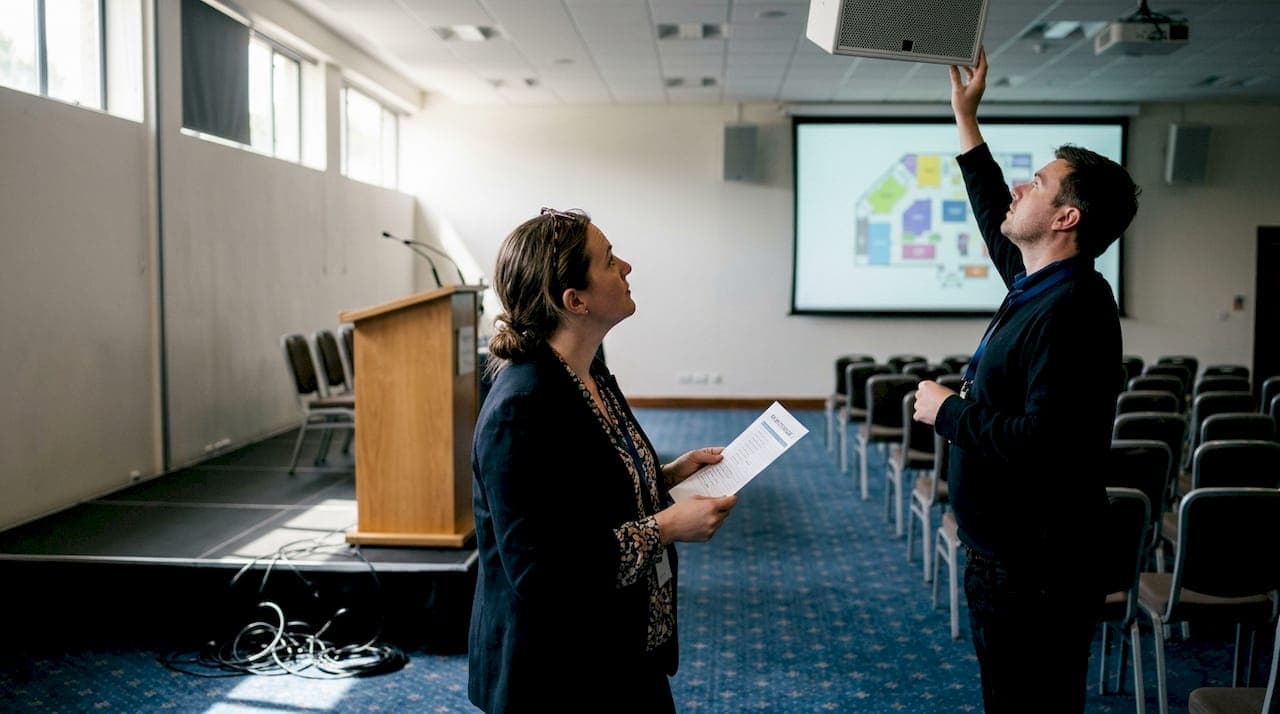
Pro Tip: Walk the venue yourself before finalising any AV brief. Sit in the back row, stand at the lectern, and check every corner of the room. What you notice in person will often reveal gaps that a floor plan simply cannot show.
Top AV solutions for different venue types
With evaluation criteria in place, let's look at the best-matched AV solutions for key venue types. Not every venue presents the same challenges, and matching your AV package to the specific environment is what separates a smooth event from a stressful one.
Hotels and function rooms tend to have variable acoustics, lower ceilings, and existing in-house AV systems that may or may not be up to corporate standard. The best approach here is portable, flexible equipment that integrates cleanly with what is already installed. Line-array speaker systems, wireless microphones, and modular LED screens give you quality without requiring a full infrastructure overhaul.
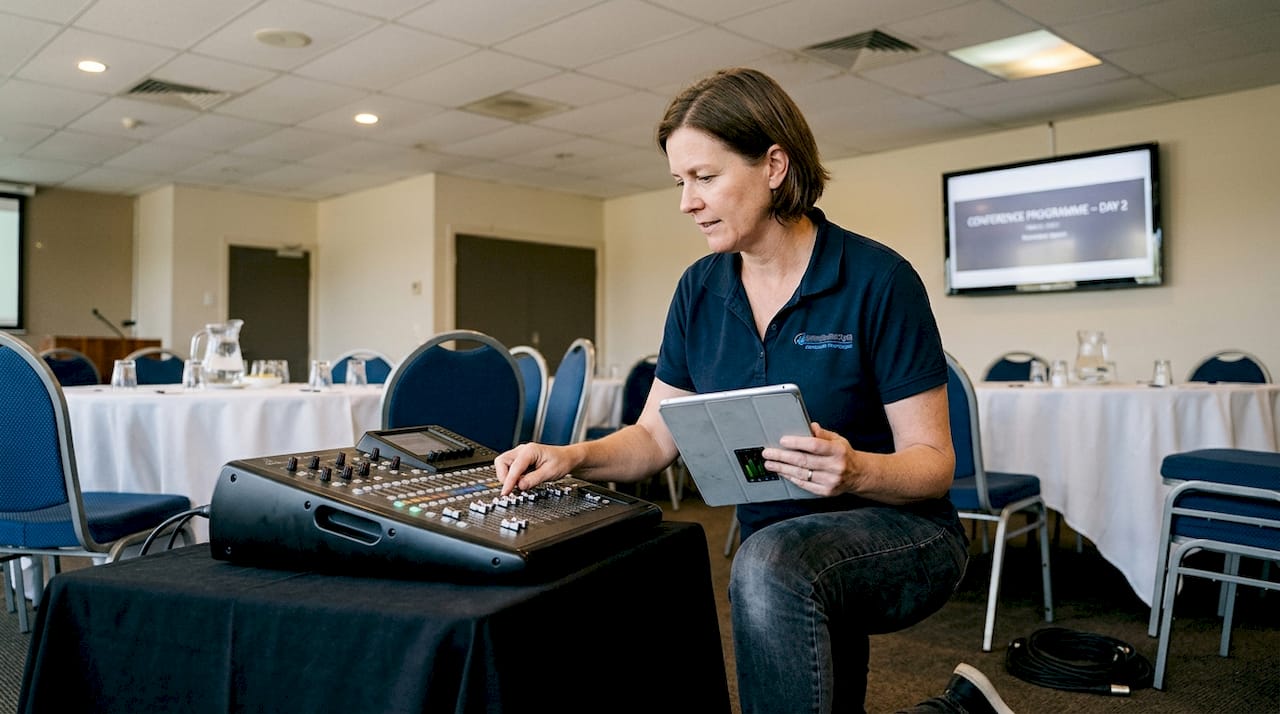
Conference centres are purpose-built for large audiences and typically support more ambitious AV setups. These venues suit large-format projection or LED video walls, distributed audio systems, and multi-zone networking AV for breakout spaces. Reviewing AV setups for conferences gives planners a clear picture of what is available and what each setup delivers in practice.
Hybrid event spaces require a different mindset entirely. The remote audience is just as important as the room. Essential components include professional-grade cameras, reliable streaming encoders, low-latency platforms, and adaptive audio that sounds natural both in the room and through a browser.
Key AV priorities by venue type:
- Hotels: Portable rigs, wireless connectivity, compatibility with in-house systems
- Conference centres: Large-scale sound, multi-display options, breakout AV
- Hybrid spaces: Camera systems, streaming reliability, adaptive audio
Customising AV by venue type can increase attendee retention by 28%, which is a compelling reason to resist the temptation of a generic package. Pairing the right equipment with the right space is exactly what advanced AV tech is designed to support.
Pro Tip: Always request a site inspection from your AV provider before the event. A skilled technician on-site will spot acoustic issues, power limitations, and rigging constraints that no venue brochure will mention.
Comparing AV solution features and ROI
Now, let's look at how these solutions stack up in direct comparison, so you can make an informed choice. Budget is always a factor, but the real question is value: what does each tier of AV investment actually deliver for your attendees and your bottom line?
| AV solution tier | Sound quality | Visual output | Streaming | On-site support | Estimated ROI impact |
|---|---|---|---|---|---|
| Entry-level | Basic PA system | Single projector | None | Self-managed | Low |
| Mid-range | Line-array speakers | Dual screens or LED | Basic streaming | Part-time technician | Moderate |
| Premium | Distributed audio | LED video wall | Full hybrid platform | Dedicated AV team | High |
| Custom/enterprise | Adaptive audio zones | Multi-room integration | Broadcast-grade | Account manager | Highest |
Comprehensive AV planning can increase event ROI by up to 40%, which means the gap between entry-level and premium is not just about aesthetics. It translates directly to measurable business outcomes.
Entry-level setups work for small internal meetings where the stakes are low and the audience is forgiving. Mid-range solutions suit most corporate conferences where professionalism matters but budgets are managed carefully. Premium and custom setups are the right call for flagship events, product launches, or any gathering where the brand experience is central to the outcome.
The trade-off is not just cost versus quality. It is also about setup complexity and support. A premium rig managed by an experienced team from AV and ROI benefits typically delivers fewer surprises than a cheaper package managed by venue staff with limited technical training. Following AV best practices at every tier helps you extract maximum value from whatever budget you have available.
AV solution trends: hybrid, sustainability, and future-proofing
Finally, consider the trends shaping the next generation of AV for venues. The corporate events industry is moving quickly, and planners who understand where technology is heading are better placed to make investments that hold their value.
Hybrid events are no longer a workaround. They are a permanent feature of the corporate calendar. Hybrid AV can increase attendance by 45% and reduce costs by 33%, making them one of the strongest ROI levers available to planners. The technical essentials include multi-camera setups, low-latency streaming platforms, and real-time audience interaction tools like live polling and Q&A integration.
Sustainable AV is gaining traction as organisations face growing pressure to reduce their environmental footprint. Key practices include:
- LED lighting and displays that consume significantly less energy than traditional alternatives
- Reusable modular staging and rigging systems that reduce material waste
- Digital signage replacing printed materials throughout the venue
- Equipment sharing and hire models that reduce manufacturing demand
Future-proofing your AV investment means choosing scalable systems that can grow with your events. Look for solutions that support software updates, remote monitoring, and integration with emerging platforms.
| Trend | Key benefit | Planning consideration |
|---|---|---|
| Hybrid AV | Broader reach, lower cost per head | Requires reliable high-speed internet |
| Sustainable setups | Reduced footprint, cost savings | Plan reusable equipment early |
| Scalable systems | Long-term value | Choose providers with upgrade pathways |
Exploring engaging AV solutions and understanding why custom AV for impact matters will help you stay ahead of these shifts rather than reacting to them.
Pro Tip: When briefing your AV provider on a hybrid event, treat the remote audience as your primary audience. Design the camera angles, audio mix, and content pacing for the screen first, and the room will follow naturally.
What most planners miss about AV success
With the landscape of AV solutions mapped, here is our hard-won take on what really works. The most common mistake we see is treating AV as a technical afterthought — something to confirm two weeks before the event after the speakers, catering, and venue are locked in.
The planners who achieve the best outcomes bring AV into the conversation at the same time as the programme itself. When AV is integrated with your event's branding, content flow, and audience engagement strategy from the start, it stops being infrastructure and starts being an experience. The difference is tangible. Attendees feel it, even if they cannot name it.
We have seen flagship conferences transformed by a single decision: making the AV team part of the creative brief, not just the technical execution. Our expert AV solutions are built around this philosophy. Early integration means fewer last-minute compromises, stronger brand consistency, and an event that feels intentional from the first slide to the final panel.
Bring your events to life with professional AV solutions
Ready to apply this knowledge to your next event? Choosing the right AV partner is as important as choosing the right venue. Professional AV specialists bring the technical expertise, equipment quality, and on-the-day support that give your event the best possible foundation.
At Conference Audio Visual, we work with corporate event planners across Australia to deliver tailored solutions that match your venue, your audience, and your goals. Whether you need AV equipment hire for a single-day conference or a fully managed setup for a multi-day programme, we make the process straightforward. Start with our AV checklist for events to clarify your requirements, or learn about event AV to build your knowledge before your next brief.
Frequently asked questions
What factors should I consider when choosing AV solutions for my venue?
Focus on venue size, event format, audience numbers, connectivity needs, and whether your event includes a hybrid component. Venue-matched AV planning is one of the most reliable ways to avoid costly surprises on the day.
How does AV quality impact attendee experience at conferences?
Well-integrated AV delivers 42% higher attendee satisfaction and supports stronger engagement, retention, and networking outcomes throughout the event.
What is the ROI of investing in advanced AV for venues?
Comprehensive AV investment can raise event ROI by 40%, with additional gains in attendee learning, satisfaction, and post-event brand perception.
Are hybrid AV solutions worth it for Australian conferences?
Yes. Hybrid AV can lift attendance by 45% and reduce costs by 33%, making them a strong choice for organisations wanting to extend their reach without proportionally increasing their budget.